Shop Promise · Shopify · 2026
A store you've never heard of, backed by a name you already trust.
Role
I led a team of 5 designers, working with more than 15 engineers, a product manager and 2 data scientists, on a one-month overhaul of how Shopify shows shoppers which stores they can count on. I set the direction across the merchant and buyer sides, and owned the final go/no-go alignment with VPs and senior stakeholders.
The problem
Shop Promise badges told shoppers a store shipped fast, and nothing more. Shoppers still had to dig for a store's return policy before trusting a brand they'd never heard of. Merchants couldn't see whether they qualified, why they didn't, or what to fix, so few took part.
Approach
I argued that the badge should only say what a merchant's own settings could back up. Instead of a separate badge program, Shop Promise reads the return rules merchants already set in Settings, so free returns, returns accepted and final sale come from the same data on every surface.
I mapped every combination of delivery and returns across the product page, cart, checkout, thank you page and order status into one content model. Each surface then tells the same story at the level of detail it has room for.
What shipped
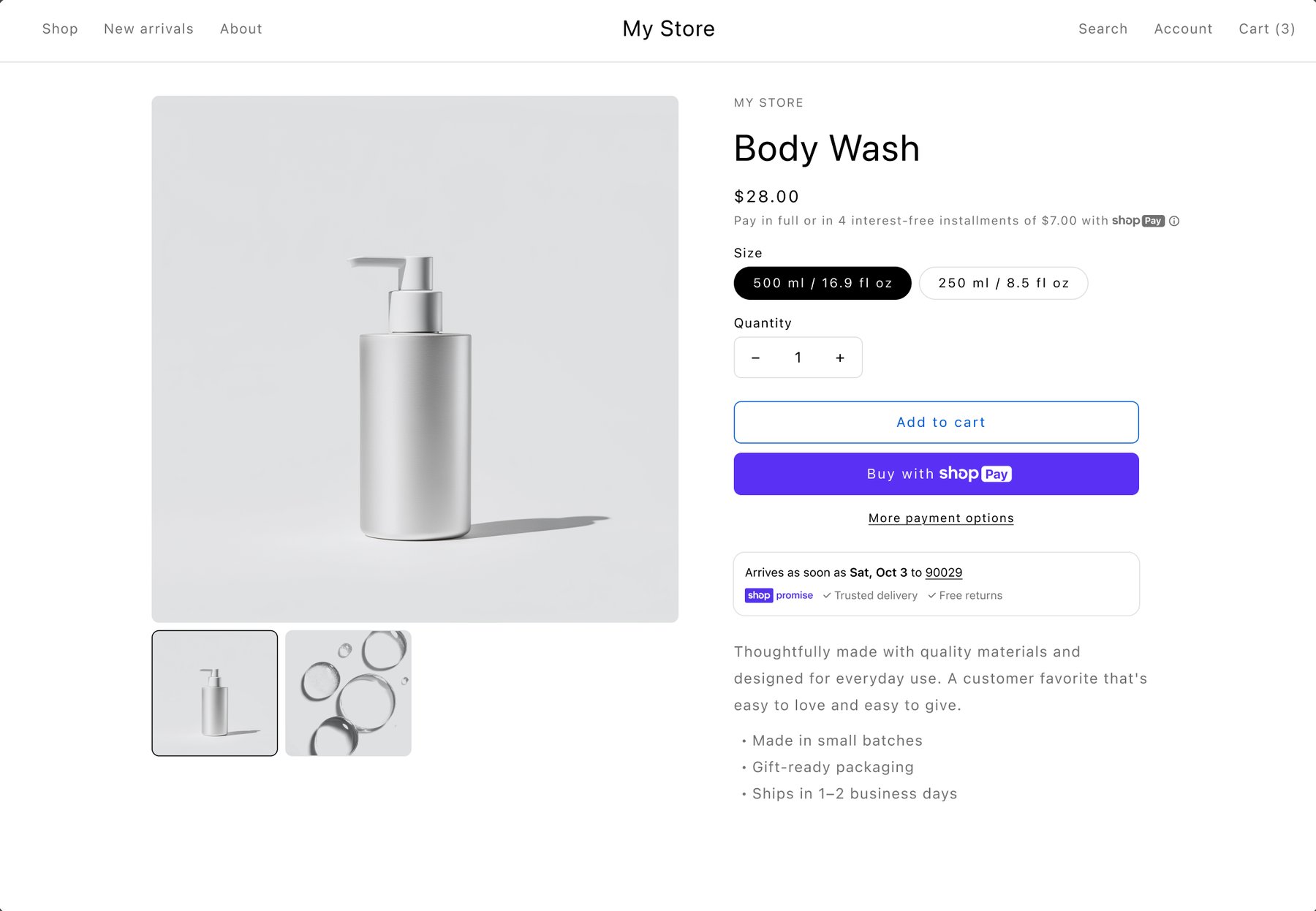
Shoppers see an arrival date with Trusted delivery and returns on the product page. The same mark follows them into checkout, under the order total, and after purchase on the thank you and order status pages.
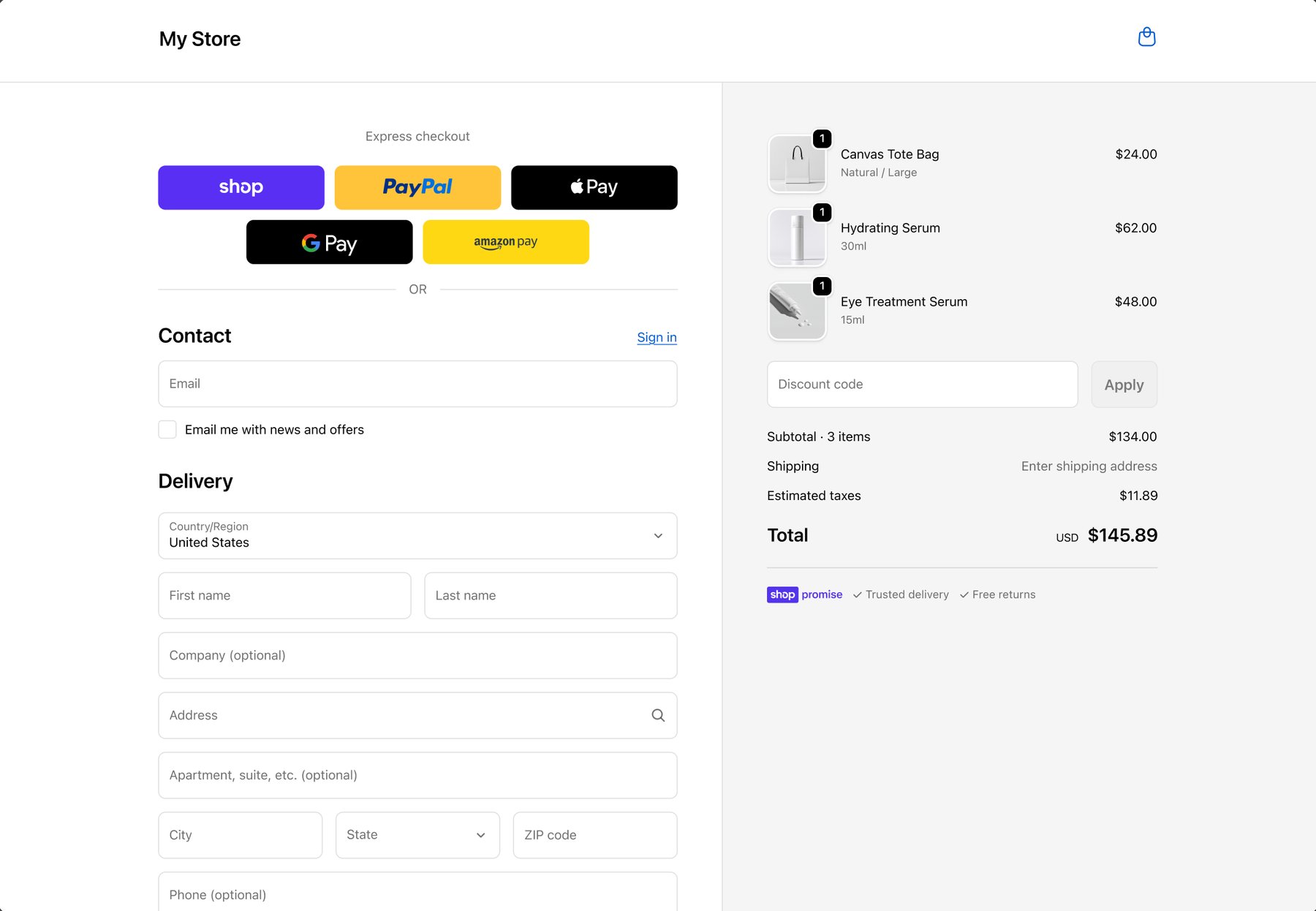
Merchants get a Shop Promise page in Settings that shows where they stand, with each requirement and a direct path to meet it. Manage return rules opens their default return rules and brings them back, so qualifying takes a couple of steps.
One mark, every condition
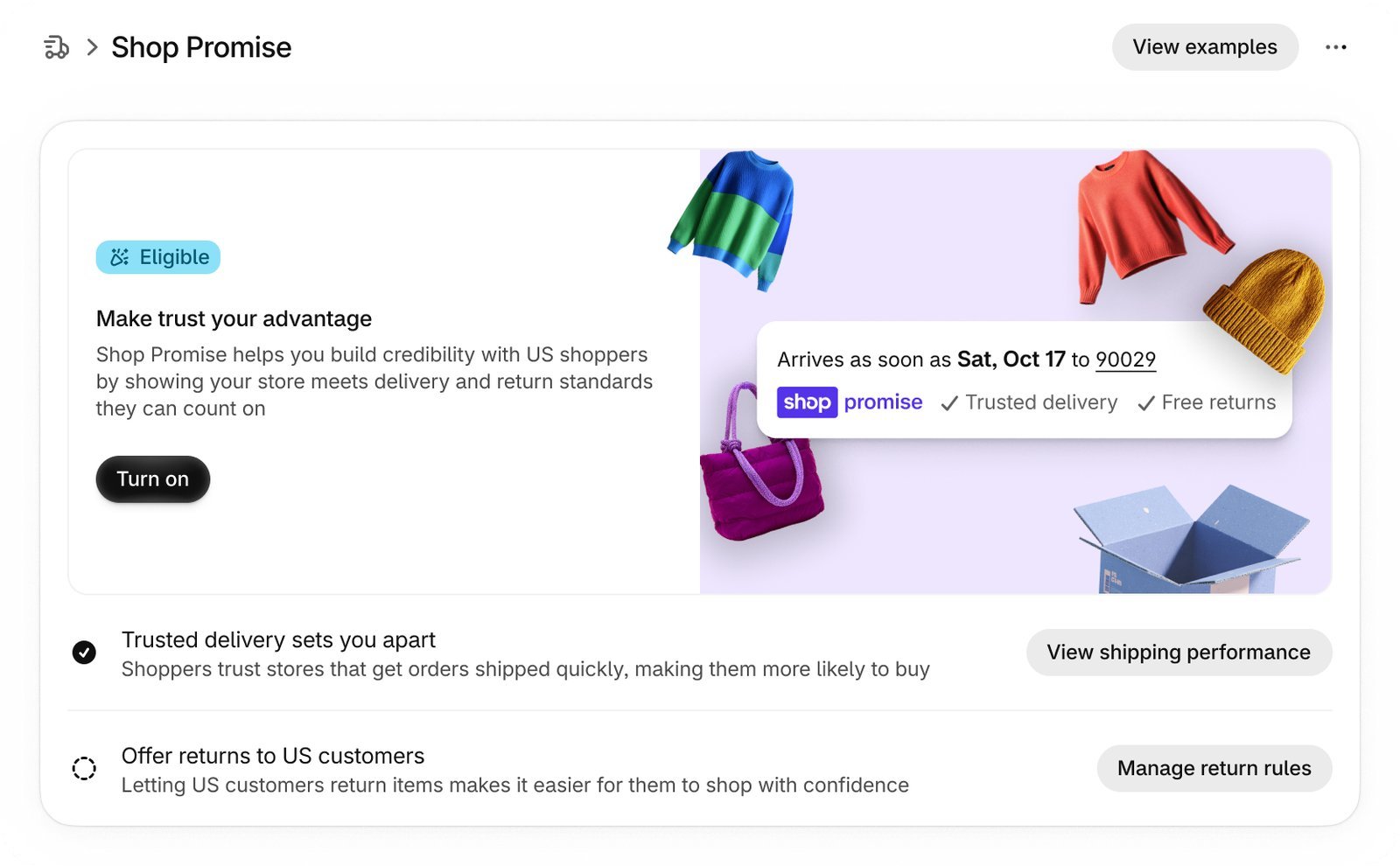
The lockup had to work on every surface the promise appears on, including the Shop app in dark mode, and stay honest about what Shopify actually knows. I designed it as one component with a short set of modifiers, so engineering could ship every state from one spec instead of a screen per case.
Modifiers
- Delivery. Free shipping leads with "Free delivery by". Paid shipping says "Arriving", so the card never implies a cost it can't show.
- Location. When the shopper can change where it ships, the zip code is a link. Without that control the date stands alone.
- Badge. Each check is earned on its own. A store that meets both shows Trusted delivery and Free returns. A store with free returns that hasn't met the delivery bar shows the returns check alone. A store that meets neither still shows the delivery date, without the badge.
- Season. A second line, "Get it by Christmas", appears only when the date clears the holiday cutoff. The card stays at three lines or fewer.
Dark and light modes
- The logo inverts instead of recoloring. In light mode the Shop pill is purple with white type. On a dark surface it flips to a white pill with purple type, so the brand reads as Shop in both and never sits as purple on purple.
- The card is a tint, not a grey. In dark mode the card is a translucent white layer over the app's surface, so it picks up whatever background it sits on instead of looking pasted in.
- Hierarchy holds. The date stays bold at full contrast in both themes. The checkmarks and labels step back to secondary text, so the promise supports the date rather than competing with it.
Shipping performance
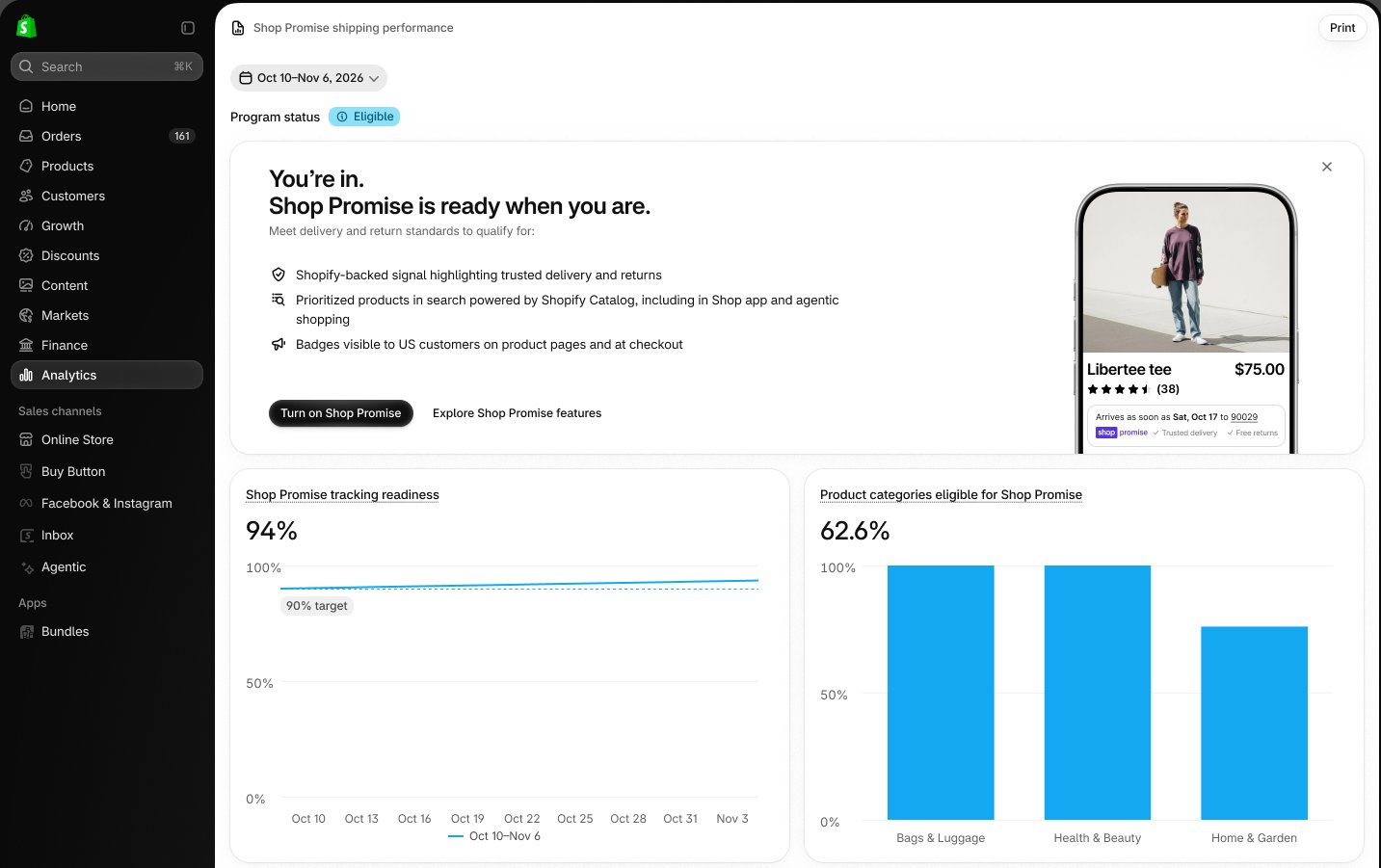
A badge merchants can't earn doesn't build trust. I adapted Shopify's existing shipping performance report to show where a merchant stands in the program, how ready their tracking is, and which product categories qualify, so "not eligible" becomes something they can act on.
Designing for mixed carts
A cart can mix items with free returns, different return windows and final sale. The checkout summary uses the shortest return window, so it never promises more than the strictest item allows. After purchase, the mark says the promise applies to eligible items.
Impact
- Merchant participation grew about 2,400% in the two weeks after launch.
- One trust signal, built on returns data, from the product page to after purchase.
- Designed and shipped in one month.
Prototype walkthroughs and the full deck are available on request.